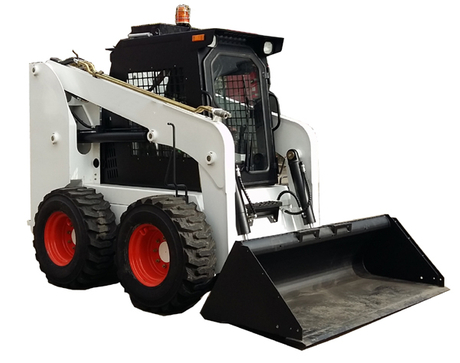
In the world of material handling, efficiency and ease of transport are paramount, particularly when navigating through narrow or confined spaces. This is especially true for environments such as vineyards, construction sites, and agricultural fields, where space can be tight, and maneuverability is key. Traditional wheelbarrows have long been the go-to tool for such tasks, but as technology advances, new equipment options like the mini dumper are becoming increasingly popular.
In this article, we will compare mini barrows with traditional wheelbarrows, focusing on their advantages in narrow road transport. We will also examine how the mini dumper outperforms the traditional wheelbarrow in specific conditions, highlighting key features, use cases, and the benefits these tools offer to businesses, especially in industries where narrow paths and space limitations are a common challenge.
What is a Mini Dumper?
A mini dumper, often referred to as a mini barrow, is a small, motorized vehicle designed to transport materials over short distances. Unlike traditional wheelbarrows that rely on manual labor, mini dumpers are powered, offering greater efficiency and significantly reducing the physical strain on operators. These machines typically have a compact design, enabling them to navigate narrow roads and confined spaces, making them ideal for environments such as vineyards, construction sites, and gardens.
A mini dumper is typically equipped with a hydraulic lift mechanism, allowing it to carry heavy loads and dump them quickly and easily. These machines are available in both tracked and wheeled versions, with tracked models offering superior traction on rough, uneven terrain. The mini dumper is a versatile tool, capable of carrying everything from soil and rocks to building materials and debris, making it an invaluable asset for professionals in industries requiring material transport in narrow spaces.
The Traditional Wheelbarrow: A Tried and Tested Tool
Traditional wheelbarrows have been in use for centuries and remain a staple for transporting small loads in confined spaces. Typically consisting of a single wheel at the front and two handles at the back, a wheelbarrow allows an operator to load and wheel materials manually. This simple, low-tech tool is cost-effective and easy to use, making it an essential item for gardeners, landscapers, and builders.
While wheelbarrows have served well in narrow road transport scenarios, they have limitations. They are designed for lighter loads and require manual effort, which can be physically taxing, especially when the operator needs to carry heavy or bulky materials. Despite being a low-cost option, the traditional wheelbarrow becomes inefficient when tasks require transporting large amounts of materials over longer distances or uneven terrain. This is where the mini dumper steps in as a superior alternative.
Mini Dumper vs. Traditional Wheelbarrow: Key Differences
When comparing a mini dumper to a traditional wheelbarrow, several factors need to be considered. These include the payload capacity, ease of operation, terrain adaptability, and time efficiency. Below is a comparison of the two:
| Feature | Mini Dumper | Traditional Wheelbarrow |
| Payload Capacity | 1,000 kg to 1,500 kg | 50 kg to 150 kg |
| Ease of Operation | Motorized, minimal physical effort required | Manual, requires significant physical effort |
| Terrain Suitability | All-terrain (tracked models) | Flat, even terrain |
| Maneuverability | Highly maneuverable in narrow spaces | Can be difficult to maneuver in tight spaces |
| Speed | Faster material transport | Slower due to manual effort |
| Cost | Higher initial cost | Low initial cost |
| Fuel/Energy Source | Gas or electric power | No power source required |
| Durability | High durability, designed for heavy-duty use | Less durable under heavy load or harsh conditions |
| Maintenance | Requires regular maintenance | Low maintenance |
1. Payload Capacity
One of the most significant differences between a mini dumper and a traditional wheelbarrow is their payload capacity. While a wheelbarrow can typically carry between 50 kg and 150 kg, a mini dumper can carry much heavier loads, with some models capable of handling up to 1,500 kg (approximately 3,300 lbs). This makes the mini dumper an ideal choice for transporting large quantities of materials like soil, rocks, fertilizers, or harvested crops, which would be impractical to carry using a traditional wheelbarrow.
2. Ease of Operation
A mini dumper is powered, requiring little to no physical effort from the operator, which significantly reduces the risk of fatigue or injury. In contrast, traditional wheelbarrows require manual effort to push, lift, and maneuver, which can be exhausting, especially when dealing with heavy loads. For workers who need to transport large amounts of material regularly, the mini dumper offers a clear advantage in terms of ease of operation, allowing the worker to focus on other tasks rather than exerting physical energy on transport.
3. Terrain Suitability
The terrain in which these tools are used is a crucial factor. Traditional wheelbarrows are limited to flat, even surfaces. If the terrain is uneven, rocky, or sloped, maneuvering a wheelbarrow becomes challenging, and the operator may struggle to keep the load balanced. On the other hand, mini dumpers are designed for all-terrain use. Many models come equipped with tracks, which provide superior traction on difficult surfaces like loose gravel, mud, or steep slopes. This makes the mini dumper the better option for navigating rough terrains, such as vineyards, construction sites, and gardens with uneven ground.
4. Maneuverability
While mini dumpers are compact and can navigate narrow paths, traditional wheelbarrows still have the edge when it comes to extreme narrowness. If the path is exceptionally tight (e.g., garden paths or narrow alleys), a mini dumper might struggle to fit through certain spaces. However, for most practical applications where the width of the path allows, a mini dumper provides excellent maneuverability and can carry more material at once, reducing the number of trips required.
5. Speed and Efficiency
When it comes to speed, the mini dumper is far superior. Since it is motorized, it can transport materials quickly across a site without the need for manual effort. This efficiency can significantly reduce the time spent on labor-intensive tasks. In contrast, a traditional wheelbarrow requires the operator to physically push and lift the load, which is slower and more taxing on the body.
Advantages of Mini Dumpers in Narrow Road Transport
1. Increased Productivity
With their larger payload capacity and faster transport speed, mini dumpers can dramatically increase productivity in material handling. A mini dumper can carry significantly more material than a wheelbarrow, reducing the need for multiple trips and allowing workers to move larger quantities of material in less time. This can be especially beneficial in large-scale operations, such as construction, landscaping, or agricultural work in vineyards and farms.
2. Reduced Physical Strain
Manual labor is a critical concern in physically demanding industries. The repetitive lifting, pushing, and maneuvering of heavy wheelbarrows can lead to fatigue, musculoskeletal injuries, and decreased efficiency. With a mini dumper, operators are spared from this physical strain, as the machine does most of the heavy lifting. This reduces the risk of injury and allows workers to focus on other aspects of the job.
3. Versatility and Multi-functionality
Unlike traditional wheelbarrows, many mini dumpers come with attachments or additional features that allow them to perform various functions beyond simple material transport. For example, mini dumpers can often be equipped with loaders, excavators, or other tools that expand their utility. This makes them highly versatile and able to perform a wide range of tasks on a job site, further justifying the higher upfront cost when compared to a traditional wheelbarrow.
4. Better for Steep and Uneven Terrain
While traditional wheelbarrows can be challenging to use on sloped or uneven terrain, mini dumpers are designed to handle rough ground. With features like track-based systems or all-terrain tires, mini dumpers can easily navigate uneven roads, hills, and other difficult surfaces. This makes them an excellent choice for agricultural, construction, or landscaping work in rugged environments.
The Cost Consideration: Mini Dumper vs. Traditional Wheelbarrow
While mini dumpers offer numerous advantages, the initial investment required for a mini dumper is significantly higher than the cost of a traditional wheelbarrow. A mini dumper typically costs several thousand dollars, depending on the model and its features. In contrast, a traditional wheelbarrow can be purchased for a fraction of that price.
However, when considering the long-term benefits of increased productivity, reduced labor costs, and improved efficiency, the mini dumper can offer better value over time. Businesses that handle large volumes of material or work in demanding environments will likely find the investment in a mini dumper worthwhile.
Conclusion
In conclusion, both mini dumpers and traditional wheelbarrows have their place in material transport, but when it comes to narrow road transport, the mini dumper holds a clear advantage. With its superior payload capacity, ease of operation, and ability to handle rough terrain, a mini dumper is an excellent choice for businesses and individuals working in environments where narrow paths, steep slopes, or uneven terrain are common. The mini dumper not only offers increased efficiency by reducing the need for manual labor but also ensures greater safety and productivity. As a versatile, motorized machine, it is able to carry heavier loads faster and more comfortably, making it a valuable investment for professionals in fields such as construction, landscaping, and agriculture.